
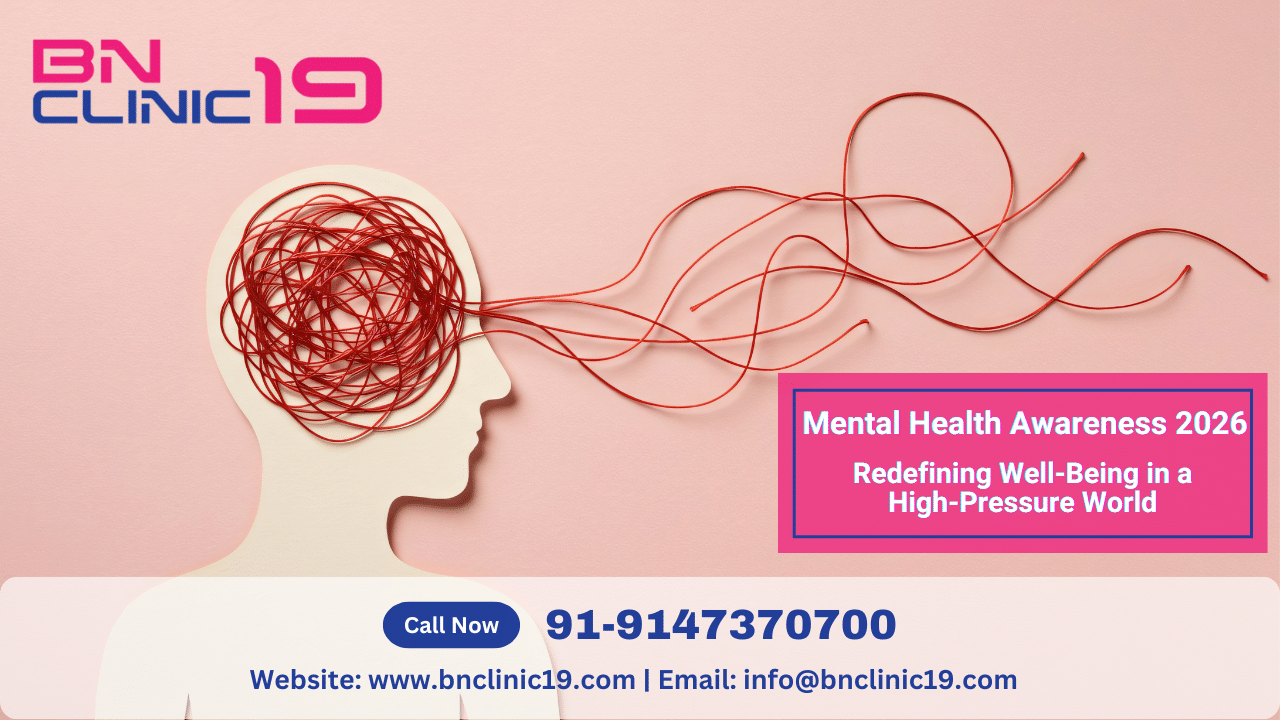






Mental health awareness in 2026 looks very different than it did a decade ago. Conversations that were previously whispered have become public, mainstream, and unavoidable. Anxiety, depression, burnout, and emotional fatigue are no longer limited to a few people. They are widespread experiences that span age, profession, gender, and geography. Despite this increased awareness, the global mental health crisis worsens, revealing a disconnect between dialogue and meaningful change.
In 2026, mental health awareness goes beyond simply encouraging people to talk. It’s about creating systems that listen, respond, and provide support. It is about acknowledging that mental well-being is essential for productivity, learning, relationships, and long-term health. Individuals, institutions, governments, and digital platforms all bear responsibility for raising awareness today.
Why Mental Health Awareness Matters More in 2026
The current world is faster, louder, and more demanding than ever before. Students face a fierce academic competition. Professionals deal with volatile job markets and constant performance pressure. Social media promotes comparison, self-doubt, and unrealistic expectations. The distinctions between work, school, and personal life continue to blur.
Mental health struggles are no longer occasional disruptions. For many, they have become a constant background noise affecting concentration, motivation, sleep, and self-worth. Ignoring these realities no longer works. The cost of untreated mental health issues is visible in declining productivity, broken relationships, substance abuse, and rising suicide rates worldwide.
Mental health awareness in 2026 is essential because societies can no longer afford silence or stigma.
From Awareness to Action
Earlier mental health movements aimed to remove stigma. While this is still important, awareness alone is insufficient. Many people today recognize mental health issues, but they lack access to care, affordability, and safe places to seek help.
In 2026, the focus has shifted to actionable awareness. This includes early detection, easy access to counseling, mental health policies in the workplace, and emotional education in schools. Awareness campaigns must now produce measurable results rather than eliciting empathy.
True awareness is reflected in how institutions respond to individual struggles.
Workplace Mental Health in 2026
Workplace burnout has reached alarming levels. Long hours, unrealistic targets, job insecurity, and digital surveillance have blurred the line between dedication and exploitation. In 2026, mental health awareness is forcing organizations to confront the human cost of unchecked productivity culture.
Progressive workplaces are adopting flexible schedules, mental health leave, and employee assistance programs. Yet many organizations still treat mental well-being as a secondary benefit rather than a core responsibility.
A mentally healthy workplace is not one with occasional wellness sessions, but one with realistic expectations, psychological safety, and respect for boundaries.
The Role of Technology and Social Media
Technology serves a dual purpose in mental health. On the one hand, it has broadened access to mental health information and online therapy. On the other hand, constant connectivity has heightened comparison, reduced attention spans, and increased anxiety.
Mental health awareness in 2026 involves teaching digital responsibility. This includes mindful screen use, critical consumption of online content, and awareness of algorithmically driven pressure. Social media platforms are also becoming more accountable for their impact on mental health.
Today, awareness includes understanding when technology benefits or harms mental health.
Mental Health and Social Inequality
Mental health issues don’t affect everyone equally. Economic insecurity, discrimination, gender inequality, and a lack of healthcare access exacerbate psychological distress. In 2026, awareness must address these structural factors rather than viewing mental health as a personal issue.
With fewer support systems, marginalized communities are often more vulnerable to mental health issues. Addressing mental health without addressing inequality produces incomplete solutions.
True awareness includes equitable access to care and culturally sensitive mental health services.
Breaking the Myth of Constant Resilience
The glorification of constant resilience is one of the most harmful narratives surrounding mental health. Society frequently rewards endurance while ignoring exhaustion. In 2026, mental health awareness will challenge this myth.
Resilience does not mean suppressing emotions or pushing through pain indefinitely. It means recognizing limits, seeking support, and recovering sustainably. Awareness today encourages rest, boundaries, and vulnerability as strengths rather than weaknesses.
Knowing when to take a break is an example of mental strength.
Early Intervention and Preventive Care
In 2026, mental health awareness will focus on prevention rather than crisis management. Early signs of stress, anxiety, and depression are frequently overlooked until they become severe. Preventive care focuses on regular mental health check-ins, emotional literacy, and stress-management techniques.
Early diagnosis improves both physical and mental health outcomes. Awareness campaigns now emphasize the importance of recognizing symptoms before they become severe.
Preventive measures save lives, resources, and years of suffering.
The Importance of Normalizing Professional Help
Despite increased awareness, many people continue to avoid seeking professional help due to stigma or misconceptions. Therapy is frequently viewed as a last resort, rather than a proactive tool.
Mental health awareness in 2026 works to normalize counseling and therapy as routine aspects of self-care. Seeking help is increasingly framed as responsibility rather than weakness.
Access to trained mental health professionals must expand alongside this normalization.
Mental Health in Families and Relationships
Families play a crucial role in mental health. However, emotional communication within families remains limited in many cultures. In 2026, awareness initiatives will include educating parents, caregivers, and partners about emotional support, healthy boundaries, and empathetic listening.
Unresolved family conflict and emotional neglect contribute significantly to mental health struggles. Awareness begins at home, not just in institutions.
Healthy relationships protect mental health more than any single intervention.
Policy and Government Responsibility
Mental health awareness is insufficient without policy support. In 2026, governments will face increased pressure to integrate mental health into public healthcare systems. This includes insurance, public counseling services, and mental health education.
Policy commitment determines whether awareness results in actual access or remains symbolic. Mental health funding aligns with societal priorities.
Mental health must be treated as a public good.
Mental Health and the Future Workforce
As automation and artificial intelligence reshape industries, young people are becoming increasingly concerned about their careers and relevance. Mental health awareness in 2026 addresses this emerging issue.
Preparing future generations requires emotional resilience, adaptability, and psychological support. Career guidance must include mental health considerations, not just skill development.
A future-ready workforce must also receive mental support.
Cultural Shifts in Understanding Mental Health
Different cultures have different perceptions of mental health. In 2026, awareness campaigns will increasingly emphasize cultural sensitivity. One-size-fits-all solutions are ineffective when dealing with diverse populations.
Culturally aware mental health initiatives uphold beliefs while challenging harmful norms. Awareness is effective when it resonates locally.
Culture influences how mental health is perceived and expressed.
The Role of Community Support
Community-based mental health support is becoming increasingly important. Peer support groups, local initiatives, and community counseling all help to reduce isolation and build trust.
In 2026, awareness will include restoring community connections weakened by urbanization and digital isolation. Humans heal better as a group than as individuals.
The community protects mental health.
Measuring Real Progress in Mental Health Awareness
Hashtags and campaigns do not accurately measure true progress. It is characterized by lower suicide rates, better access to care, and a higher quality of life. Awareness must be assessed using outcomes.
In 2026, data-driven approaches can help determine what works and what doesn’t. Accountability ensures that awareness translates into impact.
Results are more important than rhetoric.
Challenges That Still Remain
Despite progress, significant challenges remain. A shortage of mental health professionals, affordability barriers, rural access gaps, and persistent stigma continue to limit reach.
Awareness without infrastructure leads to frustration. Addressing these issues requires a long-term commitment that goes beyond annual observances.
Mental health work is ongoing and not seasonal.
The Path Forward
Mental health awareness in 2026 is at a critical turning point. The foundation of conversation has been laid. The task now is to build systems, policies, and cultures that support mental well-being consistently.
Individuals must prioritize self-awareness. Institutions must provide safe environments. Governments must ensure accessibility. Technology must operate responsibly.
Mental health is a collective responsibility.
Conclusion
Mental health awareness in 2026 marks a shift from acknowledgment to accountability. It acknowledges that emotional well-being is critical to education, employment, interpersonal relationships, and societal stability. Today, awareness is defined by how effectively people are supported rather than how frequently mental health is discussed. A future that values mental and physical health equally is not idealistic; it is necessary. Investing in mental health is an investment in humanity itself.