
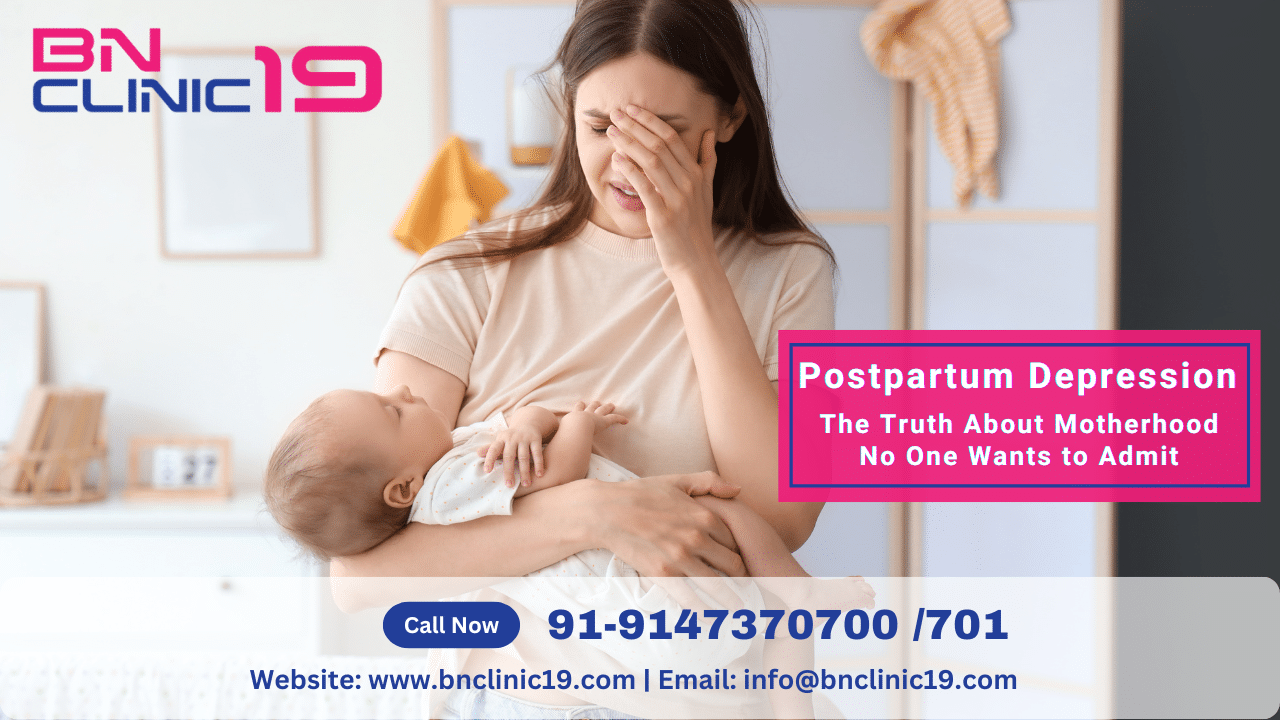






“Motherhood doesn’t break women.
The expectation that it must feel beautiful all the time does.”
In India, childbirth is celebrated loudly. Rituals, sweets, visitors, blessings, advice.
And then, just as loudly, the mother is expected to adjust.
Postpartum depression is not a rare medical condition or a Western concept. It is what happens when women are praised for sacrifice but denied space to struggle.
This is the part of motherhood we refuse to name.
And silence is exactly what keeps it alive.
Postpartum Depression Is Far More Common Than We Admit
Indian women search privately what they cannot say aloud:
- Why don’t I feel happy after delivery
- Is it normal to feel detached from my baby
- Why do I feel exhausted, angry, or empty
Postpartum depression affects women across cities, towns, joint families, and nuclear homes. It affects working women and homemakers. First-time mothers and those with multiple children.
Yet it is brushed aside as weakness, overthinking, or hormones settling.
That dismissal is not harmless.
It teaches women to doubt their own pain.
The Cultural Pressure to Be a “Good Mother”
In India, motherhood is not just a role. It is an identity.
A new mother is expected to be grateful, patient, nurturing, and endlessly resilient. Complaints are seen as disrespectful. Emotional struggle is seen as ingratitude.
So when postpartum depression appears, women feel they are failing not just themselves but their families, traditions, and expectations.
There is no language for grief in motherhood.
Only instructions to adjust.
What Postpartum Depression Actually Looks Like
In Indian households, postpartum depression often looks like this:
- Being surrounded by people yet feeling completely alone
- Being told what to do constantly, but never being asked how you feel
- Losing autonomy over your body, routine, and emotions
- Smiling through exhaustion because elders are watching
- Feeling guilty for wanting space
Postpartum depression does not always look dramatic.
It looks like quiet suffocation.
Why Indian Mothers Stay Silent
Silence is not accidental. It is taught.
Women are told:
- This happens to everyone
- Don’t think so much
- Focus on the baby
- Other women managed, you will too
Mental health is still treated as secondary. Emotional pain is expected to be endured. Many women fear being judged, dismissed, or labeled unstable.
So they endure quietly.
They wake up.
They feed the baby.
They perform strength.
And hope it passes.
This Is Not a Failure of Character or Culture
Postpartum depression is not caused by lack of love.
It is not caused by being ungrateful.
It is not caused by modern thinking.
It is shaped by hormonal changes, sleep deprivation, lack of emotional autonomy, pressure to conform, and absence of support focused on the mother.
A woman can love her child deeply and still feel overwhelmed, detached, or broken.
Both can exist. And often do.
The Healthcare Gap After Delivery
In India, medical care largely ends once the baby is healthy.
Follow-ups focus on physical recovery, vaccinations, and feeding schedules. Mental health check-ins are rare, rushed, or nonexistent.
Postpartum emotional collapse is treated as something that will settle on its own.
We prepare women extensively for delivery.
We barely prepare them for what comes after.
That gap has consequences.
Stop Calling Silence Strength
There is nothing brave about suffering quietly.
Postpartum depression does not need advice, comparisons, or lectures about sacrifice. It needs:
- Space to speak without correction
- Emotional support without judgment
- Access to mental health care without stigma
- Families that listen instead of minimizing
Strength is not endurance at the cost of self.
Seeking Help Is Not a Western Idea
Getting help for postpartum depression is not rebellion against culture. It is the preservation of life.
Therapy, counseling, medication, and support groups are not signs of failure. They are tools for recovery.
Ignoring symptoms does not make a woman a better mother.
It only deepens the damage.
To the Mother Reading This Quietly
If you feel numb, angry, disconnected, or ashamed, this is not your fault.
You are responding to pressure, expectation, and silence that no woman is meant to carry alone.
You deserve rest beyond rituals.
You deserve care beyond duty.
You deserve to be seen as a person, not just a mother.
Changing the Conversation in India
Postpartum depression does not disrespect motherhood.
Silence does.
Until we stop romanticizing sacrifice and start acknowledging reality, women will continue to suffer quietly behind closed doors.
Talking about postpartum depression does not weaken families.
It strengthens them.
And it is a conversation India can no longer afford to avoid.